8 Paycheck Habits That Make Your Money Last All Month

You know that feeling when payday hits and you feel rich for about four days? Then suddenly it’s the 23rd and you’re staring at your bank balance like it personally betrayed you. Yeah. We’ve all been there.
Here’s the thing nobody tells you: stretching a paycheck isn’t about earning more. It’s about a handful of small habits that quietly change how your money behaves. I picked these up the hard way — through years of the feast-or-famine paycheck cycle — and honestly, they work better than any budgeting app I ever downloaded and abandoned.
So let’s get into it. These are the eight habits that actually keep money in your account until the next payday rolls around.
1. Pay Yourself First (Yes, Even If It’s Just $25)

The moment your paycheck lands, move money to savings before you spend a single dollar. Not after the bills. Not “whatever’s left over” — because spoiler alert, there’s never anything left over.
Set up an automatic transfer for payday morning. Even $25 per paycheck adds up to $650 a year, and you won’t miss money you never saw in your checking account. I started with $20 a paycheck back when I was broke, and I genuinely forgot it existed until I needed it. That’s the whole point.
Why does this work so well? Because willpower is a terrible savings plan. Automation doesn’t negotiate with you at 11pm on a Friday. It just moves the money and gets on with its life.
- Set the transfer for the same day your paycheck hits
- Start small — $20 to $50 is plenty
- Bump it up by $10 every time you get a raise
2. Give Every Dollar a Job Before the Month Starts
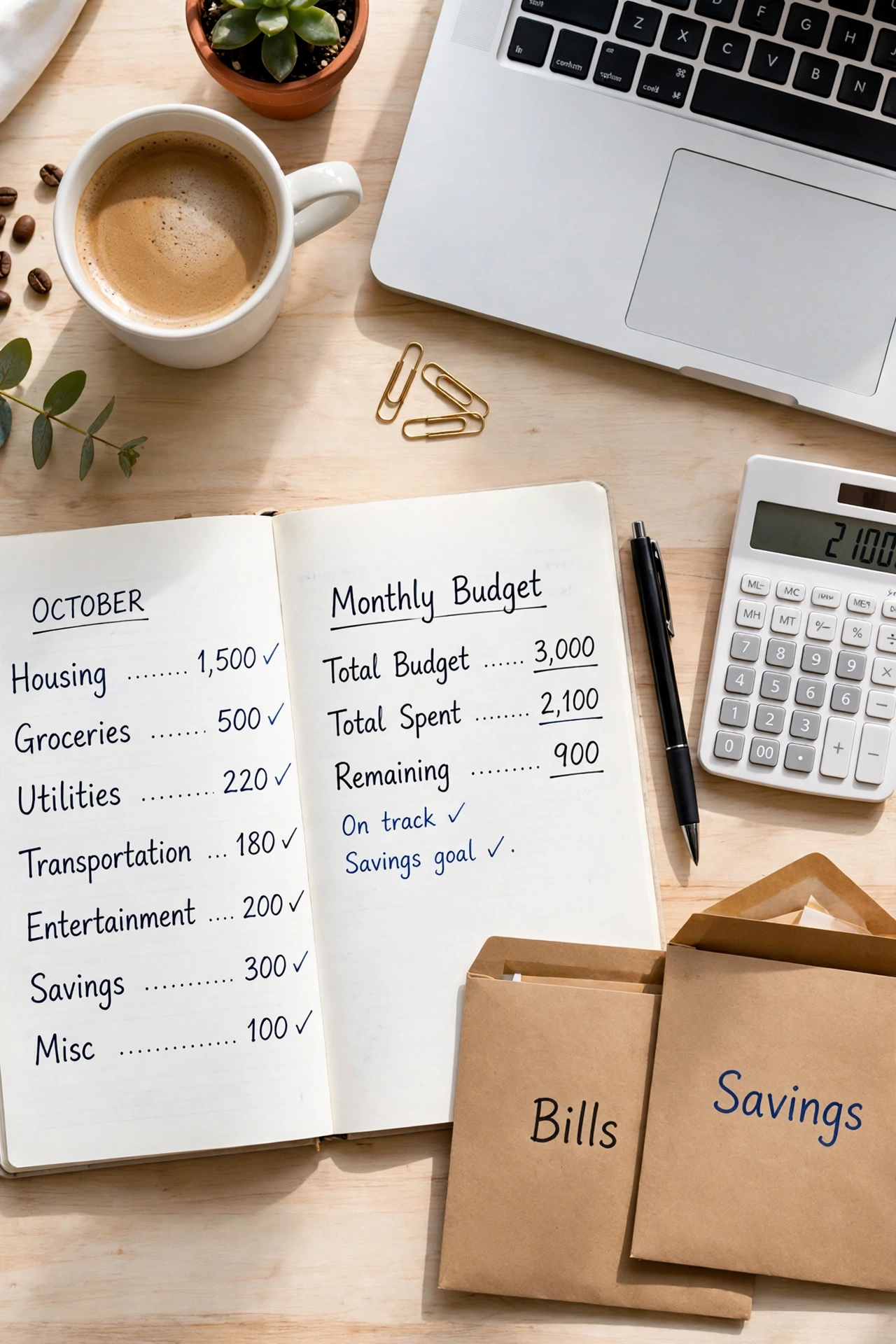
Ever wonder where your money actually goes? Most of us have no clue, and that’s exactly why it disappears. The fix takes about twenty minutes once a month: sit down and assign every dollar a purpose before you spend it.
This isn’t a punishment. It’s a plan. Rent gets its chunk, groceries get theirs, fun money gets a real line item (because pretending you won’t spend on fun is how budgets die). When every dollar has a job, you stop accidentally spending your electric bill money on takeout. FYI, this is the single habit that changed my finances the most.
The 10-Minute Version That Actually Works
If full budgeting feels overwhelming, try this instead:
- List your fixed bills first — rent, utilities, insurance, minimum debt payments
- Add your savings transfer from habit #1
- Set a realistic grocery number (check last month’s actual spending, not your fantasy number)
- Whatever’s left gets split between fun money and extra debt payoff
That’s it. Four steps. No spreadsheet wizardry required.
3. The 48-Hour Rule for Non-Essential Purchases

See something you want? Great. Wait 48 hours before buying it. If you still want it after two days — and you can point to exactly where the money comes from — buy it guilt-free.
Here’s what surprised me: about 80% of the stuff I “had to have” stops feeling urgent within a day. The impulse fades, the tab stays open for a week, and eventually I close it without a second thought. My bank account noticed the difference within the first month.
This habit works because it separates the dopamine hit of wanting from the actual decision to spend. Online stores are literally engineered to make you buy in the moment — the countdown timers, the “only 2 left!” warnings, the one-click checkout. A 48-hour pause breaks their spell.
4. Meal Plan Like Your Grocery Bill Depends on It (Because It Does)

Food is where most paychecks quietly bleed out. Not the big grocery shop — the random $14 lunches, the “I forgot to defrost anything” takeout orders, the grocery runs where you went in for milk and came out $87 lighter.
Pick five dinners for the week. That’s it. Five. Write the list, shop once, and stop wandering grocery aisles hungry. Families who meal plan typically save $100 to $200 a month without eating any worse — often better, honestly, because planned meals beat sad desk salads every time.
Keep It Simple
- Theme your nights so you don’t have to think: Taco Tuesday, pasta Thursday, whatever works
- Cook double on Sunday and eat the leftovers for lunch
- Keep three “emergency meals” in the freezer for the nights life gets in the way
Does this sound boring? Maybe a little. But you know what’s more boring? Checking your balance on the 28th and finding $12. I’ll take the meal plan.
5. Audit Your Subscriptions Every Payday

Subscriptions are the ninjas of personal finance — small, silent, and they strike every single month whether you use them or not. That streaming service you haven’t opened since March? Still charging you. The app with the free trial you forgot to cancel? Charging you too.
Once a month, scroll through your bank statement and look for every recurring charge. Ask one question about each: did I use this in the last 30 days? If the answer is no, cancel it right then. Don’t put it on a to-do list. Cancel it in that moment, while you’re looking at it.
I did this last spring and found $63 a month in subscriptions I’d forgotten about. That’s $756 a year — basically a free vacation — for services I wasn’t even using. IMO that’s the easiest money you’ll ever “earn.”
6. Keep a “Fun Money” Envelope (Yes, a Real One)

Here’s a hot take: budgets fail because they’re joyless, not because people lack discipline. If your plan leaves zero room for fun, you’ll blow it up by week two and feel guilty about it. So build the fun in on purpose.
Decide on a fun-money amount per paycheck — $40, $60, whatever fits — and treat it as sacred. Coffee with friends, a new book, a random Target candle that smells like a forest: it all comes from this pot, and when it’s gone, it’s gone. But here’s the key: spending your fun money is not failure. It’s the plan working.
Cash in an envelope works best for this because you can literally see it shrinking. But a separate account or a prepaid card does the same job. The method matters less than the boundary: fun money is real money with a real limit, and it protects the rest of your paycheck from impulse raids.
7. Check Your Balance Every Morning (30 Seconds, That’s All)

This one sounds annoying. I know. But hear me out: people who check their balance daily spend less than people who avoid looking. It’s not magic — it’s awareness. When you know exactly where you stand, you make different choices without even thinking about it.
Grab your coffee, open your banking app, glance at the number. Thirty seconds. That’s the whole habit. You’ll catch fraudulent charges faster, you’ll spot subscription creep sooner, and you’ll feel the month’s rhythm instead of getting blindsided by it.
The trick is to look without judging yourself. The number is just information, not a report card. Some mornings it’ll be lower than you’d like. That’s fine. Knowing beats guessing every single time.
8. Automate the Boring Stuff So Willpower Never Gets a Vote

Here’s my honest opinion: if your financial plan depends on you making good decisions every single day, your plan is broken. Humans are tired, busy, and surrounded by ads. The habits that stick are the ones that run themselves.
Set up autopay for every fixed bill. Automate your savings transfer. Automate a small extra payment toward your highest-interest debt. Schedule your retirement contribution so it increases 1% every year without you lifting a finger. Automation turns good intentions into guaranteed outcomes — and it works while you sleep, while you’re on vacation, while you’re too busy to think about money at all.
The goal isn’t to think about money constantly. It’s to set things up once so you barely have to think about it at all. That’s real financial peace: not a huge salary, just a system that quietly works in the background while you live your life.
The Bottom Line
None of these habits require a finance degree or a six-figure salary. They require about an hour of setup total and a few minutes of attention each week. Start with just one — honestly, start with paying yourself first — and add another when the first one feels automatic.
Your paycheck doesn’t have to disappear by the 15th. With a few small systems in place, it can actually last the whole month. And once it does, that breathing room changes everything. 😊