
Meditation vs. Journaling for Anxiety: Which One Actually Calms a Racing Mind?

It's 2 a.m., and your brain has decided to replay an awkward comment you made in 2014. Sleep has left the building. You need something that works, and two options keep showing up: sit still and breathe, or grab a pen and dump everything on paper.
So who wins the meditation vs journaling for anxiety showdown? I used both for months, and the answer surprised me.

Why Your Mind Races in the First Place

Anxiety loves a loop. Your brain spots a possible threat, runs a worst-case simulation, and then hits replay. Psychologists call this rumination, and it feeds anxiety instead of solving anything.
Both meditation and journaling attack that loop, but from opposite angles. Meditation teaches you to watch your thoughts without chasing them. Journaling pulls your thoughts out of your head and parks them on a page.
Which approach calms you faster? It depends on what your mind is doing at the moment. Let's break each one down.
How Meditation Works for Anxiety
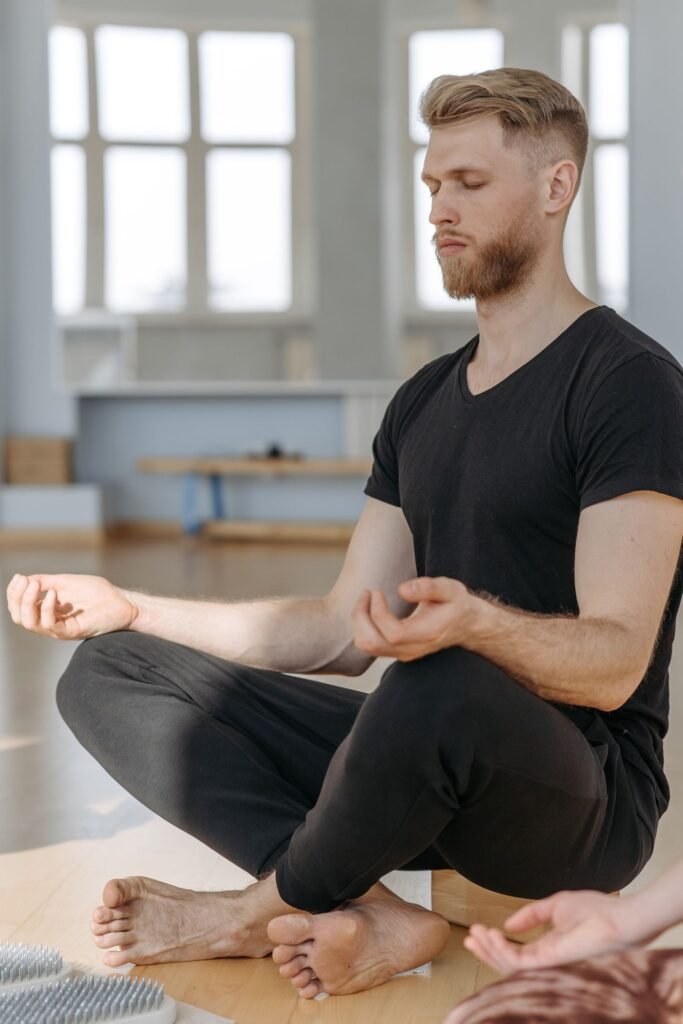
Meditation trains your attention. You pick an anchor, usually your breath, and every time your mind wanders, you notice and bring it back. That return is the real workout, not the silence.
Mindfulness programs show moderate reductions in anxiety symptoms across a lot of studies. They don't work miracles, but they work better than most people expect.
What Meditation Does Well
- It builds a long-term skill. You learn to notice a spiral early instead of five hours in.
- It costs nothing. You need your lungs and a spot to sit.
- It works anywhere. A stalled elevator, a boring meeting, a doctor's waiting room.
- It calms your body. Slow breathing nudges your nervous system out of fight-or-flight.
Where Meditation Falls Short
Sitting quietly with a panicking brain can feel awful at first. During my first week, I counted breaths up to six, then spent four minutes mentally rewriting my grocery list. I felt like I'd failed at sitting.
Silence can also stir up distressing memories for some people, especially those with trauma. If that sounds familiar, work with a trauma-informed teacher instead of going solo with an app.
How Journaling Works for Anxiety

Journaling gives your thoughts somewhere to go. Your brain can juggle only so many worries at once, and writing them down frees up space. Handwriting also slows you to a pace where you can actually examine a thought instead of just feeling it.
Research on expressive writing, and on writing about worries before high-pressure tests, suggests that putting anxious thoughts into words can reduce their grip. The effect varies from person to person, but the pattern shows up often.
Journaling Styles That Help
- The brain dump: Write whatever's in your head for five to ten minutes, with no editing.
- Scheduled worry time: Pick a 15-minute window each day to write worries, then tell yourself the rest of the day is off-limits.
- The thought check: Write the scary thought, then list evidence for and against it.
- The next-step note: Write the worry, then write one tiny action you can take.
Where Journaling Falls Short
Journaling can turn into rumination with a nicer notebook. If you write the same worry across five pages and end up more upset, you didn't process anything. You just gave your anxiety a publisher.
It also takes some privacy and a few quiet minutes. Try journaling on a crowded train, and you'll quickly appreciate meditation's portability.
Meditation vs Journaling for Anxiety: Side-by-Side

| Factor | Meditation | Journaling |
|---|---|---|
| Speed of relief | Slower at first, builds over weeks | Often immediate for a specific worry |
| Best for | General anxiety, body tension, reactivity | Looping thoughts, decision stress, pre-event nerves |
| Learning curve | Steeper (sitting with your mind is hard) | Gentle (anyone can write) |
| Setup needed | None | Pen, paper, some privacy |
| Main risk | Frustration, or stirring up difficult feelings | Rumination on paper |
| Long-term payoff | Better awareness and emotional regulation | Better clarity and problem-solving |
Which One Fits Your Kind of Anxiety?

Not all racing minds race the same way. Think about what your anxiety actually does.
Pick Meditation If…
- Your anxiety shows up in your body first: tight chest, clenched jaw, shallow breathing.
- You react fast and regret it later.
- You want a skill you can use in public, without a notebook.
Pick Journaling If…
- Your thoughts feel like a tangled mess you can't sort.
- You lie awake planning, replaying, or rehearsing conversations.
- You have a specific event or decision causing the stress.
Still can't decide? Ask yourself: do I need to quiet my thoughts, or do I need to understand them? Quiet points to meditation. Understanding points to journaling.
My Honest Take

IMO, journaling wins for emergencies and meditation wins for maintenance. When my mind spirals at midnight, I can't meditate my way out. My brain treats "just focus on your breath" like a dare. A five-minute brain dump, though, gets the noise out fast.
But journaling alone never changed how quickly I spiral. Meditation did. After a couple of months of ten-minute sits, I started catching the thought "everything is going wrong" as a thought instead of treating it like breaking news. That shift mattered more than any single journal entry.
So my verdict: journaling puts out the fire, and meditation fireproofs the house. Dramatic? Slightly. Accurate? Pretty much.
How to Combine Them (Without Making It a Whole Thing)

You don't have to pick a team. A short routine can use both, and it takes about 15 minutes.
- Write for five minutes. Dump every worry onto the page, messy handwriting included.
- Circle one thing you can act on. Write the smallest next step beside it.
- Close the notebook. This signals to your brain that the worry now lives somewhere else.
- Meditate for five to ten minutes. Focus on your breath, and when your mind wanders, bring it back without scolding yourself.
FYI, the order matters. Writing first clears the loudest thoughts, which makes meditation much easier. Reverse it, and you may spend your whole sit rehearsing tomorrow's meeting.
Mistakes That Make Both Methods Backfire

- Expecting instant calm. Meditation especially needs a few weeks before it feels natural.
- Judging your sessions. A "bad" sit where your mind wandered 200 times still counts as practice.
- Journaling only when you feel awful. Write on calm days too, so the habit survives bad ones.
- Quitting after three tries. You wouldn't judge the gym after one workout. 🙂
When to Get Extra Help

Meditation and journaling help many people, but they don't replace professional care. If anxiety disrupts your sleep, work, or relationships for weeks, talk to a therapist or doctor. Cognitive behavioral therapy, in particular, has strong evidence behind it, and many therapists actually assign journaling-style exercises.
If meditation makes you feel worse, stop and ask a professional. Pushing through isn't a badge of honor.
The Bottom Line

The meditation vs journaling for anxiety debate has no single winner, because each tool solves a different problem. Journaling untangles specific worries fast. Meditation builds the long-term ability to stop spiraling in the first place.
If you want to start tonight, grab a pen and write for five minutes. Tomorrow, sit for five minutes and watch your breath. In a week, you'll know which one your brain prefers, and you'll probably end up using both.