
Why Do Couples Fight More During the Holidays?

Nothing says “peace on earth” like two adults whisper-yelling in a Target parking lot over wrapping paper. If that scene sounds familiar, relax. Your relationship hasn’t cracked.
So, why couples fight more during the holidays? December stacks stress, money pressure, family politics, and lousy sleep onto one crowded calendar, and your partner happens to stand closest to the pile. You don’t suddenly love each other less. You just have less patience, less time, and more reasons to snap.
Here’s what actually drives the bickering, and what you can do about it.
The Pressure Cooker Effect

Normal life has gaps. You work, you come home, you flop on the couch, and you recover. The holidays erase those gaps and replace them with parties, school concerts, travel plans, and a gift list that grows every time you look at it.
Your brain treats all of it as one giant to-do list. Once everything feels urgent, small annoyances feel enormous. Your partner’s creative dishwasher-loading technique, which you tolerated happily in October, now feels like a personal attack.
The Invisible Workload Explodes
Someone has to buy the gifts, remember the teacher’s present, mail the cards, plan the menu, and track who’s allergic to what. In many households, one partner handles most of that thinking while the other partner never notices it exists. IMO, this mental load causes more December fights than any single argument topic.
Quick test: who in your house knows your nephew’s shoe size? That person probably feels resentful right now, and the other person probably has no clue.
Zero Recovery Time
People fight more when they run on empty. Stress hormones climb, sleep shrinks, and the habits that keep you pleasant (the gym, the quiet morning coffee, the evening walk) vanish. You drop the routines that keep you human, then act shocked when you stop acting human.
Money: The Third Wheel at Every Holiday Table

Money explains a huge chunk of why couples fight more during the holidays. Seasonal spending exposes how differently two people think about it. One of you sees a generous gift as love. The other sees a credit card statement arriving in February.
Both of you have a point, which makes the argument impossible to win.
Here are the most common money flashpoints:
- Gift budgets: One partner plans $200 per kid, and the other quietly spends $500.
- Family obligations: Travel costs, host gifts, and the “we always do a big dinner” tradition all add up.
- Secret purchases: Innocent surprise shopping can look suspiciously like hiding money.
- Leftover debt: Last year’s regret hangs over this year’s receipts.
My partner and I learned this the hard way a few years ago. We never set a budget, we each bought “a few little things,” and by New Year’s we owed a $900 surprise. We argued for an entire evening. Then we wrote one number on a sticky note, slapped it on the fridge, and kept it there every December since. It sounds silly, but it works.
Why Couples Fight More During the Holidays: The Family Factor
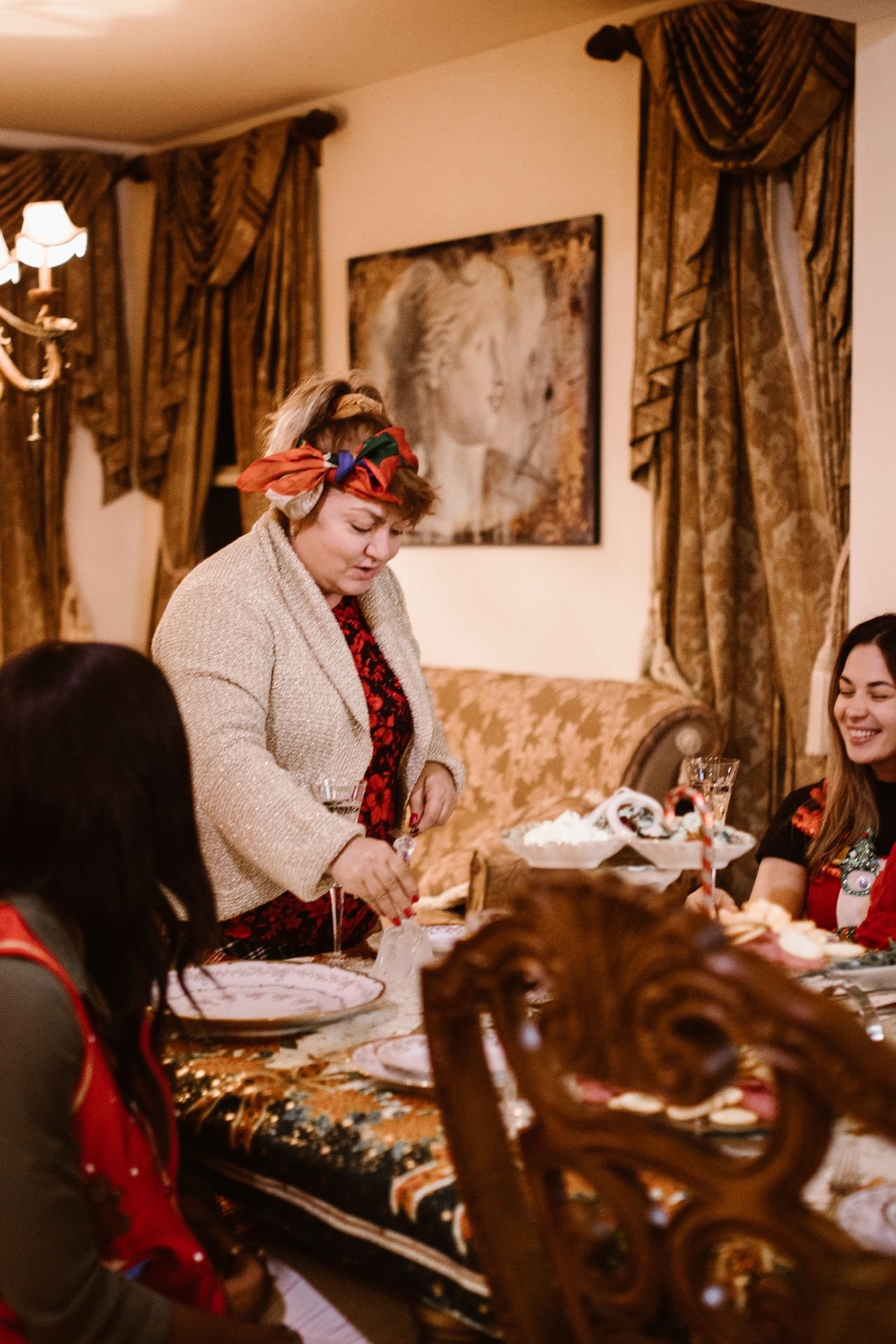
Holidays drag in-laws, parents, siblings, and decades of history into your living room. Your relationship suddenly shares a stage with people who knew you at age twelve. Nobody performs well in that setup.
The Tug-of-War Over Whose Family Wins
Whose house hosts Christmas Eve? Who drives six hours with a cranky toddler? Every couple negotiates these questions, and almost nobody negotiates them calmly.
Each partner feels loyal to their own family. Each partner also hears criticism whenever the other suggests a change. “Maybe we skip your mom’s this year” never sounds as gentle out loud as it did in your head.
FYI, “let’s just alternate years” sounds like a perfect solution until year three, when nobody remembers whose turn it is. Write the plan down. A shared note on your phone beats a memory every time.
Old Roles Sneak Back In
Walk into your childhood home and you often slip right back into your childhood role. The responsible one starts managing everybody. The rebel starts sulking. Your partner watches this transformation and wonders who replaced the person they married.
Then the chain reaction starts. Your mom makes a comment about your career, your partner either stays silent or defends you too hard, and either choice sparks a fight. By the time you reach the car, the argument has nothing to do with the turkey.
Expectations vs. Reality

Movies sell a fantasy: fresh snow, matching pajamas, and a perfectly browned ham. Real life delivers delayed flights, burnt casseroles, and a kid who refuses to wear pants. When reality misses the fantasy, someone needs a villain, and your partner volunteers by standing nearby.
Each of you also carries a private picture of the “right” holiday. One person wants a quiet morning with coffee and a book. The other wants twenty relatives and organized chaos. Neither person says so out loud, so you end up fighting about cinnamon rolls instead.
Take Dana and Marcus, who fought for three days over a Christmas tree. Dana pictured a cozy afternoon at a farm stand, sipping cider and picking the perfect fir. Marcus pictured a quick run to the big-box store on the way home from work. Neither one mentioned the plan, so each felt ambushed when the other made a move. Their “tree fight” was really a fight about who gets to decide how the season feels.
When did you last tell your partner what you actually want from the season? Not what you think you should want. What you want.
The Unglamorous Culprits: Booze, Sugar, and Sleep

Not every fight comes from deep psychological roots. Sometimes cookies and cocktails cause the whole mess. These everyday factors quietly wreck your mood:
- Alcohol: A few glasses of eggnog lower your filter, and old grudges walk right through the gap.
- Sugar: The crash after a dessert binge makes you snippy.
- Short sleep: Late parties and early flights drain your emotional reserves.
- Travel stress: Cramped cars, unfamiliar beds, and airport chaos test everyone’s patience.
Nobody settles a serious disagreement well while hungry, tired, and slightly tipsy. Yet couples try it constantly, usually at 11 p.m. in someone’s guest room. Save the big conversations for a well-rested morning.
Our friends Priya and Tom learned this at a New Year’s Eve party. Two glasses of wine in, Tom brought up a fight from August about her sister’s wedding. Priya walked out to the porch, and the couple spent the next morning apologizing for things neither one remembered clearly. A tired, tipsy brain also misreads tone. A text that reads as neutral at noon can sound like an insult at midnight.
How to Fight Less This Season

You can’t eliminate holiday stress, but you can stop it from running your relationship. Try these steps:
- Hold a 20-minute planning meeting in November. Cover budget, travel, hosting, and who handles what before the chaos starts.
- Assign tasks by owner, not by favor. If one person “helps” with gifts, the other still carries the responsibility. Give each task a clear owner instead.
- Set a spending limit and write it down. Agree on a total number and a per-person cap, and share it where you both see it.
- Schedule empty evenings. Block at least a few nights with no plans, no guests, and no obligations.
- Create a pause signal. Pick a word or phrase that means “I’m overwhelmed, give me ten minutes.” Respect it every time.
- Present a united front with family. Agree beforehand on how you’ll answer nosy questions and handle pushy invitations.
- Protect the basics. Eat real food, drink water, and sleep. It sounds boring because it works.
Say the Quiet Part Out Loud
Most holiday fights grow from unspoken assumptions. Tell your partner what matters most to you this season. Then ask what matters most to them, and listen without interrupting.
What to Do When a Fight Happens Anyway

Even with perfect planning, you will snap at each other. Healthy couples argue, and one December blowup doesn’t doom your marriage. What matters is the repair.
Apologize quickly and skip the scorekeeping. Don’t relitigate the argument in front of Aunt Linda. If the fight escalates, take a walk around the block, breathe, and come back with a clearer head. 🙂
Last year, I snapped at my partner over a missing ornament box, then stormed out to the garage. Ten minutes later, I came back with two mugs of cocoa and said, “I was wrong about the box, and I’m sorry I raised my voice.” That short apology did more good than an hour of arguing. Specific repair beats a general apology every time. “I got sharp when you mentioned my mom” lands far better than “you always make everything about her.”
Then ask yourself one simple question: will this matter in March? Usually, it won’t, and that perspective alone can end the argument.
The Bottom Line

Couples fight more during the holidays because the season piles pressure, money stress, family history, and exhaustion onto the same two people. The fights rarely signal a deeper problem. They signal that you both need a plan, a break, and a little grace.
Pick one tip from the list above and try it this week. Then watch how much quieter the parking lot gets.